


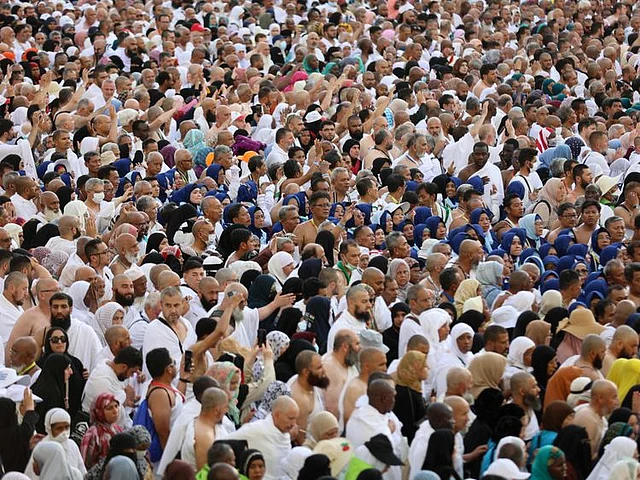
In the context of Hajj, Tafweej (also spelled Tafweez) refers to the official crowd management system implemented by the Saudi Ministry of Hajj and Umrah to regulate, schedule, and organize the movement of pilgrims among the holy sites of Makkah, Mina, Arafat, and Muzdalifah. The system is a central pillar of modern Hajj operations, designed to manage the safe movement of millions of pilgrims during periods of intense congestion.
Tafweej was introduced to prevent overcrowding, reduce the risk of stampedes, and optimize the flow of pilgrims particularly during critical and high-risk rituals that take place within limited timeframes.
Key Aspects of the Tafweej System
1. Strategic Crowd Control
Under Tafweej, pilgrims are divided into organized groups, each assigned a strict, time-bound schedule for movement between ritual sites. These schedules are carefully planned to distribute pilgrim flow evenly and avoid peak congestion periods.
2. Management of Key Pilgrimage Movements
The Tafweej system regulates several crucial stages of the Hajj, including:
Departure to Arafat: Coordinating the movement of pilgrims from Mina or Makkah to Arafat on the 9th of Dhul-Hijjah.
Muzdalifah Movement: Organizing the transportation of pilgrims to Muzdalifah after sunset on the Day of Arafat.
Rami (Stoning of the Jamarat): Scheduling the stoning ritual from the 10th to the 13th of Dhul-Hijjah to prevent overcrowding at the Jamarat complex.
Tawaf al-Ifadah: Coordinating pilgrim movement to the Grand Mosque in Makkah for the obligatory circumambulation.
Technology-Driven Operations
Tafweej is powered by advanced technologies, including Geographic Information Systems (GIS) and real-time monitoring dashboards. These tools allow authorities to track pilgrim movement, assess crowd density instantly, and adjust schedules immediately if congestion is detected.
Mandatory Compliance
Adherence to Tafweej schedules is compulsory for all licensed Hajj companies, state pilgrims’ welfare boards, and authorized agents. Any deviation from assigned movement times is strictly discouraged, as compliance is essential to maintaining overall safety and order.
Importance of Tafweej in Hajj Safety
The Tafweej system is especially critical during the Day of Sacrifice (10th Dhul-Hijjah) and the Days of Tashreeq (11th–13th Dhul-Hijjah), when the Jamarat area experiences the highest concentration of pilgrims.
Proper scheduling during these days significantly reduces pressure on infrastructure and minimizes safety risks.
The effectiveness of the system is evident in its outcomes. In 2022, for instance, approximately 90 percent of pilgrims successfully completed the stoning ritual under specialized Tafweej plans, demonstrating the system’s role in enhancing both safety and efficiency.
Conclusion
Tafweej represents a modern, data-driven approach to managing one of the largest annual human gatherings in the world. By combining structured scheduling, technological monitoring, and strict compliance, the system plays a vital role in ensuring that pilgrims can perform their religious obligations safely, orderly, and with dignity.