


By Abdulkadir Aliyu Shehu
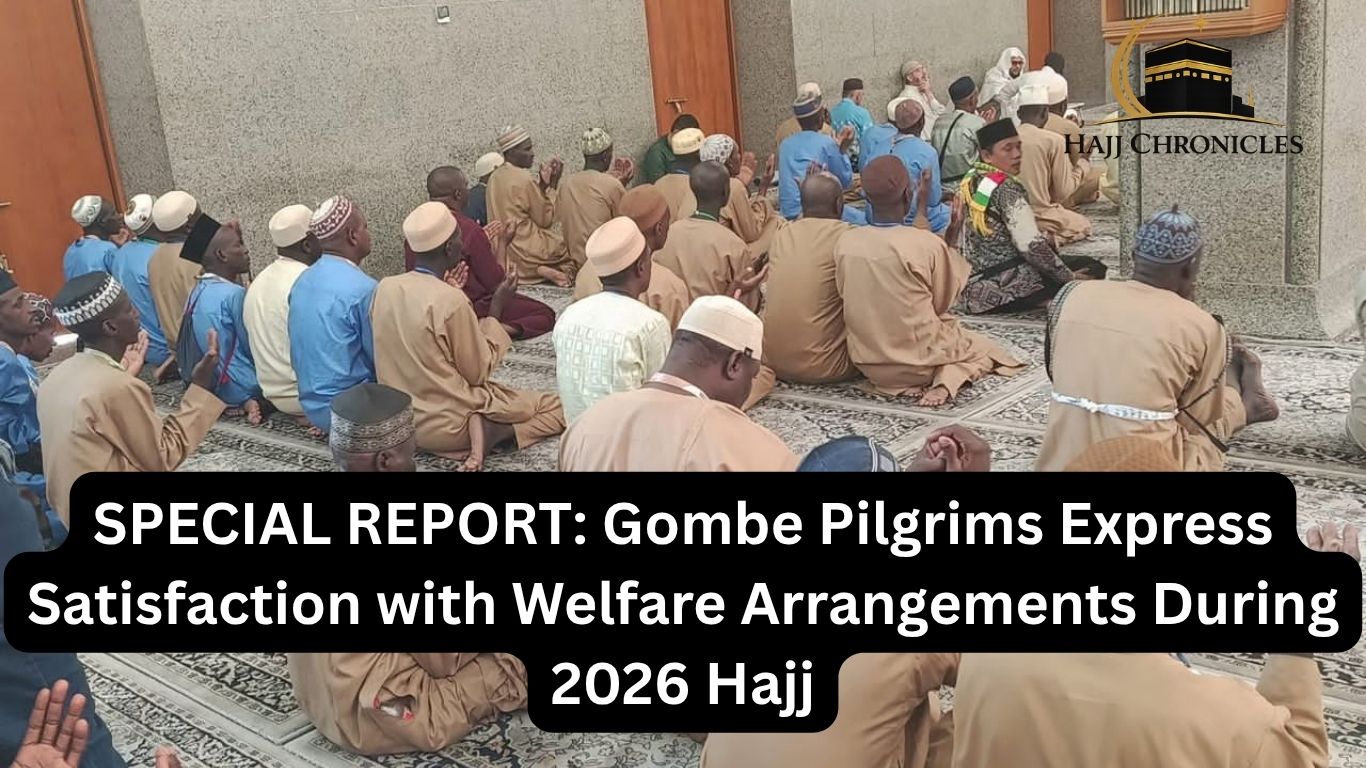
An independent assessment conducted among pilgrims from Gombe State participating in the 2026 Hajj exercise in the Kingdom of Saudi Arabia has shown widespread satisfaction with the welfare arrangements provided for the contingent in Madinah and Makkah.
The assessment, which involved interviews with over 50 pilgrims from different local government areas of the state, focused on accommodation, feeding, transportation, healthcare services, and overall welfare coordination by the Gombe State Muslim Pilgrims Welfare Board.
Findings indicate that the majority of the pilgrims are pleased with the level of organisation and support provided since their arrival in the Holy Land.
After spending four days in Madinah, the pilgrims have now settled in Makkah ahead of the next phases of the pilgrimage, including the movement to Mina and Arafat.
Many respondents described the atmosphere in Makkah as peaceful, organised, and conducive for worship.
The accommodation arrangements received positive reviews from several pilgrims interviewed during the assessment. Many noted that the hotels allocated to the Gombe contingent are situated close to Masjid al-Haram, making movement for daily prayers and religious activities easier and less stressful.
“The accommodation has been comfortable, and the proximity to the Haram has really helped us,” a pilgrim from Dukku Local Government Area said.
Others described the facilities as clean, properly managed, and suitable for pilgrims, particularly the elderly.
The feeding arrangements were also widely commended. Respondents described the meals served as hygienic, nutritious, and suitable for Nigerian pilgrims.
Some pilgrims stated that the consistency and quality of the meals have contributed positively to their physical well-being throughout the exercise.
Transportation within the holy cities was also described as efficient and well coordinated.
A pilgrim from Akko Local Government Area praised the responsiveness of welfare officials, saying issues brought to their attention were addressed promptly.
Female pilgrims interviewed during the assessment equally commended officials assigned to support and guide them during the exercise. Some described the welfare personnel as respectful, patient, and attentive, especially in assisting elderly pilgrims and those requiring special care.
The medical team attached to the Gombe contingent also received commendation for maintaining regular health monitoring and providing timely medical attention whenever necessary.
Several respondents confirmed that medical personnel remained available to attend to health concerns and provide support to pilgrims.
Religious scholars accompanying the contingent were also praised for conducting regular enlightenment sessions on the spiritual and practical aspects of Hajj.
According to many respondents, the lectures have been particularly beneficial to first-time pilgrims seeking a better understanding of the rites and obligations of the pilgrimage.
Communication between pilgrims and welfare officials was also described as effective, with respondents acknowledging the prompt response mechanisms established to address complaints and welfare-related concerns.
A few pilgrims, however, appealed for additional crowd-control support during peak prayer periods around the Haram to make movement easier for elderly pilgrims.
Many respondents attributed the smooth coordination of the exercise to the commitment of the Gombe State Government under the leadership of Governor Muhammadu Inuwa Yahaya.
The pilgrims also commended the Gombe State Muslim Pilgrims Welfare Board for its supervision of accommodation, feeding, transportation, and other welfare services.
Special commendation was extended to the Executive Secretary of the Board, Alhaji Sa’adu Hassan, for overseeing the welfare and coordination of Gombe pilgrims in Saudi Arabia.
The Chairman of the Board, the Emir of Dukku, Alhaji Abdulkadir Haruna Rasheed, was also praised for his leadership and support throughout the exercise.
As preparations intensify for the movement to Mina and Arafat, many pilgrims expressed confidence that the current level of coordination and welfare support would be sustained throughout the remaining stages of the pilgrimage.
Overall, findings from the assessment suggest that the 2026 Hajj exercise for Gombe pilgrims has so far been marked by effective welfare coordination, satisfactory living conditions, and confidence in the leadership overseeing the operation.