


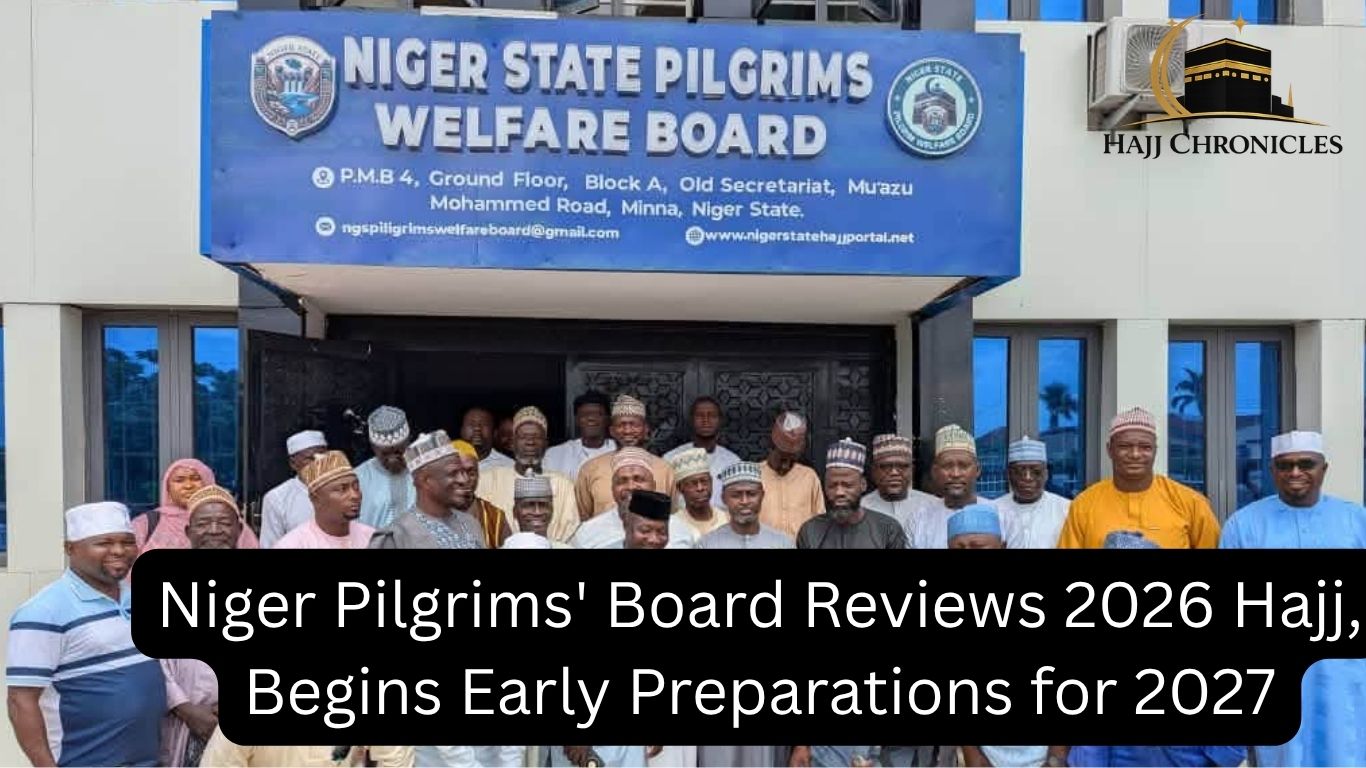
The Niger State Pilgrims’ Welfare Board has commenced early preparations for the 2027 Hajj by holding a strategic post-Hajj review meeting with both outgoing and newly appointed Area Pilgrims Welfare Officers (APWOs).
According to the Information Officer of the Board, Jibrin Usman Kodo, the meeting convened on Thursday by the Executive Secretary of the Board, Sheikh Muhammad Awwal Aliyu, focused on evaluating the successes, challenges, and lessons from the 2026 Hajj exercise to improve future pilgrimage operations.
Representing the Executive Secretary, the Director of Administration, Alhaji Ado Bello, praised the outgoing APWOs for their dedication and selfless service during the 2026 Hajj, while welcoming the newly appointed officers and encouraging them to sustain and improve on the achievements recorded by their predecessors.
To ensure a smooth transition, Bello directed the Board’s Finance and Operations Departments to oversee a comprehensive handover process involving operational records, official documents, contacts, and other vital materials. He noted that preserving institutional knowledge through an effective transfer of experience and best practices would enhance continuity and operational efficiency.
He reaffirmed that the welfare, safety, and spiritual fulfilment of pilgrims remain the Board’s foremost responsibility.
“The success of the 2027 Hajj will largely depend on effective collaboration between outgoing and incoming APWOs, proper planning, and the implementation of recommendations arising from the review of the 2026 exercise,” he said.
Also speaking at the meeting, the Director of Operations, the Assistant Director of Finance, and the Technical Assistant to the Executive Secretary urged the APWOs to intensify public awareness campaigns on early Hajj registration, uphold transparency in all aspects of pilgrimage administration, and maintain close cooperation with the Board to further improve service delivery.
- The meeting ended with the Niger State Pilgrims’ Welfare Board reaffirming its commitment to transparency, accountability, prudent resource management, and the continuous improvement of services provided to pilgrims before, during, and after the Hajj.