


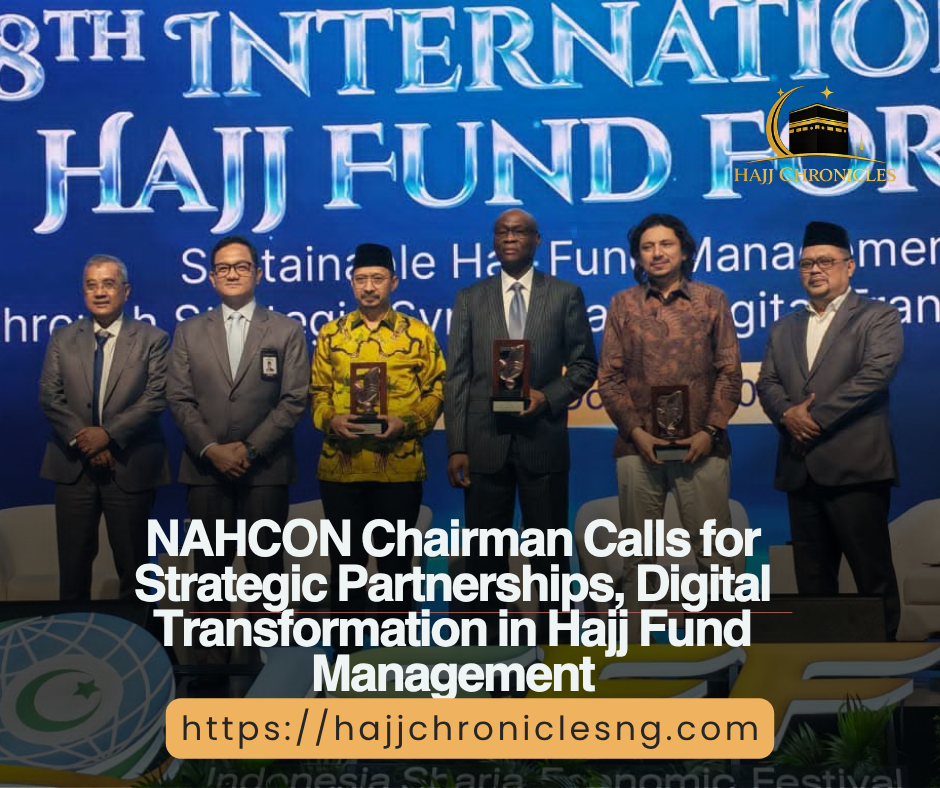
The Chairman and Chief Executive Officer of the National Hajj Commission of Nigeria (NAHCON), Ambassador Ismail Abba Yusuf, has called for stronger international partnerships and greater adoption of digital technology to ensure sustainable and efficient management of Hajj funds.
Ambassador Yusuf made the call while participating as a panelist at the 8th International Hajj Fund Forum (IHFF) 2026, organised by Indonesia’s Hajj Financial Management Agency (Badan Pengelola Keuangan Haji — BPKH) at the Jakarta International Convention Center.
According to the statement by the Head of Information and Publications of the Commission, Shafii Sani Mohammed, the forum, held under the theme, “Sustainable Hajj Fund Management Through Strategic Synergy and Digital Transformation,” brought together policymakers, Islamic finance experts and Hajj administrators from various countries to examine emerging challenges confronting the global Hajj industry.
Discussions focused largely on rising pilgrimage costs, global economic uncertainties, financial sustainability and the need to safeguard Hajj funds for the benefit of present and future generations of pilgrims.
Speaking during a high-level panel session alongside BPKH Executive Board Chief, Fadlul Imansyah, and other international experts, the NAHCON Chairman highlighted Nigeria’s experience in Hajj administration and stressed the importance of cooperation among government agencies and institutions.
He said effective use of digital technology, coupled with strategic international partnerships, would strengthen the resilience of the Hajj sector against global economic and financial pressures.
“The future of Hajj administration depends on our collective ability to innovate. Managing Hajj funds efficiently is no longer just about financing the immediate next pilgrimage; it is about protecting wealth and ensuring sustainable benefits for future generations of pilgrims,” Ambassador Yusuf said.
He added that NAHCON was committed to leveraging technology and strengthening cooperation with countries such as Indonesia to promote transparency, efficiency and sustainable financial management in Nigeria’s Hajj operations.
The NAHCON Chairman further identified investment in high-yield infrastructure within the Hajj value chain, particularly hospitality and logistics, as an important strategy for reducing operational costs while generating sustainable returns.
The forum also featured addresses by Indonesian officials, including the Minister of Hajj and Umrah, K.H. Mochamad Irfan Yusuf, and the Vice Minister of Finance, Juda Agung.
Participants commended Nigeria’s active participation in the forum and its efforts to deepen cooperation with other Muslim-majority countries in the development and application of financial technology for modern Hajj administration.
NAHCON’s participation in the 8th International Hajj Fund Forum, according to the Commission, represents another step in Nigeria’s efforts to develop a technology-driven and financially sustainable Hajj management system capable of creating long-term value for pilgrims.